
14122252 Rfn. C. Clarke, Draft No. DAGYO, 1st Batt R.U.R., No. 2. British Army Post Office – 9th Mar 1951
“Dear Bobbie,
I am writing today hoping that my letter finds your mother, father and Francis in the best of health and spirits as at the time of writing this. I am quite well except that I am browned off on this ship, but that is to be expected with the close confinement and doing the same thing every day …”
I simply cannot stop thinking about Charlie. I have known about Charlie as far back as I can remember. He and Bobbie were good friends in the late 1940’s and early 1950’s. Bobbie lived at 71 Union Street and Charlie lived at 53 Castle Street in Ballymoney, Co. Antrim.
“Well Bobbie up to now this journey is uninteresting to me so far, as this is my third time over it and I will not see anything interesting until I pass Hong Kong and then our next stop is in Japan and that will be strange ground to me, at present we are off the coast of Malaya, tomorrow we dock at Singapore…”
“… last time I was there I wish we were pulling in at the docks of Dervock so that I could visit Ballymoney… Ha! Ha!”

RUR in Korea, 1950-51
The following is an extract from the Regimental History of The Royal Ulster Rifles 1793-1960 by Lieutenant Colonel M J P M Corbally.
It stated in part:
“…The second of the two major operations in which the Battalion took part was the Battle of Imjin of the 23rd to 25th April, 1951. Although both the R.O.K. and U.S. flanking formations were heavily engaged the full weight of the attack of the Sixty-Fourth Chinese Communist Army was directed on to the sector held by the British 29th Brigade. The battalions of the latter were disposed on a very wide front. The Belgians were forward across the river. South of the river the 5th Fusiliers and the Gloucesters were right and left forward Battalions respectively, with a gap between them of four thousand yards….
…The Battle of the Imjin was over. The casualties within the Battalion were 10 officers and 176 other ranks, mostly missing. Although the enemy offensive had rolled to within five miles of Seoul, it had broken on the river line. The Gloucesters, in their epic action, had been destroyed. But the Sixty-Fourth Chinese Communist Army had been rendered virtually ineffective for an appreciable period. And Seoul, the South Korean capital, the prize for which the Chinese had gambled and lost, had been saved….
On 12 May 1951 an article published in the Belfast Newsletter stated:
New Offensive Awaited
Tokio, Friday
United Nations troops pushed ahead three miles on the East Korean front today. In the west, they dug in to meet an expected Communist Offensive. South Koreans, in an eastern advance north of the 38th Parallel, met light opposition. Elsewhere, the front was quiet except for probing patrols, buts there was continual movement behind the Communist lines.
The Communists are building up four stables pockets for a possible two-pronged drive on Seoul. The appeared to be manning in an areas north and south east of the old capital.
Loudspeakers blared across the mountaintops, urging Communists to hold their positions and telling them reinforcements were on the way. Allied officers, however, said there was evidence of a general Communist withdrawal between Yanggu and Inja, in which sector the Allied lines has moved up – Associated Press.
R.U.R. Casualties
The War Office yesterday issued Korea casualties list No. 31. It gives the names of the following men of the Royal Ulster Rifles: – Missing – 6979990 Rifleman J. R. Anderson, 14122252 Rifleman C.D. Clarke…”

On Friday 25 April 1952 an article published in the Belfast Telegraph stated:
“Roll of Honour – In Memoriam
… Clarke – Treasured memories of my dearly loved only son and brother, Charles, Rf., R.U.R. (attached to Gloucesters), missing, believed killed in the Imjin Battle, Korea, 25th April, 1951. Sadly missed by his loving Mother and Sister, 53 Castle Street, Ballymoney. Love and remembrance last forever.”
On Friday 5 November 1954 an article published in the Belfast Telegraph stated:
“Presumed Dead in Korea
The names of 19 men of the Royal Ulster Rifles who are now presumed to have lost their lives in Korea were announced by the War Office last night. Previously the men were reported missing:
Irish names on the list are: – Sgt. D. Gaw (Omagh); Riflemen C. Clark (Ballymoney)…”

Excerpt of letter from Charlie to Bobbie…
“Bobbie, I will draw to a close hoping to hear from you soon, so give my regards to all at B’money and now I will say cheerio until next time.
I remain, Your Pal Charlie xxxxx”
Like many others, Charlie did not come home. I can only hope that he and Bobbie, my father, have been long since reunited.
“…They went with songs to the battle, they were young, Straight of limb, true of eye, steady and aglow. They were staunch to the end against odds uncounted, They fell with their faces to the foe. …”
Excerpt from The Fallen by Robert Laurence Binyon (1869-1943)



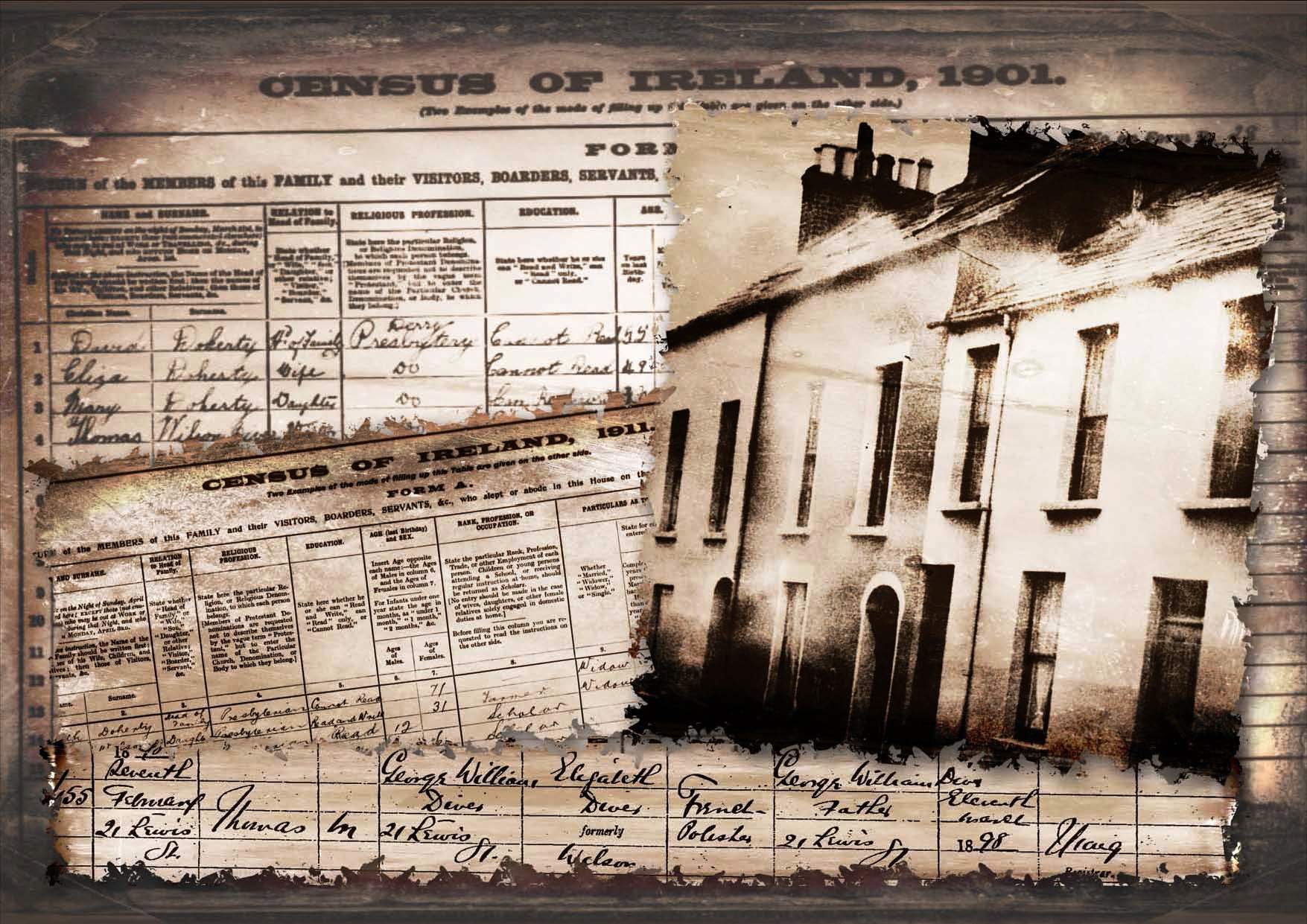 In researching further I very quickly discovered much more than anticipated!
 Not eighteen months later and once again, published in the Londonderry Sentinel on 17 Oct 1918, an article read:
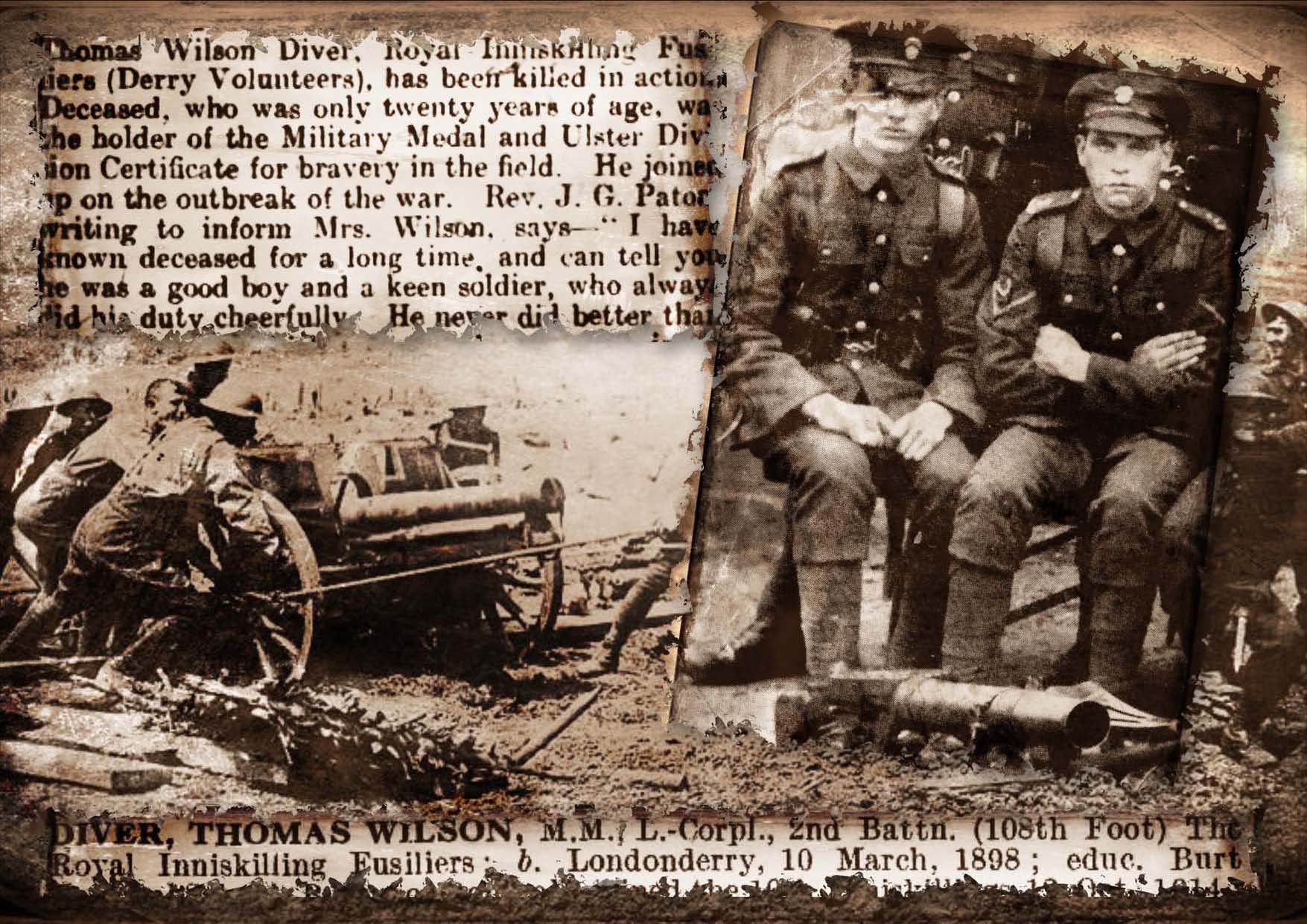 The UK Army Registers of Soldiers’ Effects confirmed that this was indeed my Thomas Wilson Diver. George William Diver was listed as his father and a War Gratuity of £23 10 Shillings for his war service was paid. The Grave Registration Report noted: “DIVER, Lce. Cpl. Thomas, 15459, M.M. “A” Coy. 2nd Bn. Royal Inniskilling Fusiliers. 29th Sep 1918. Age 20, son of George William and Elizabeth Diver of 5 North Street, Rosemount, Londonderry.”
 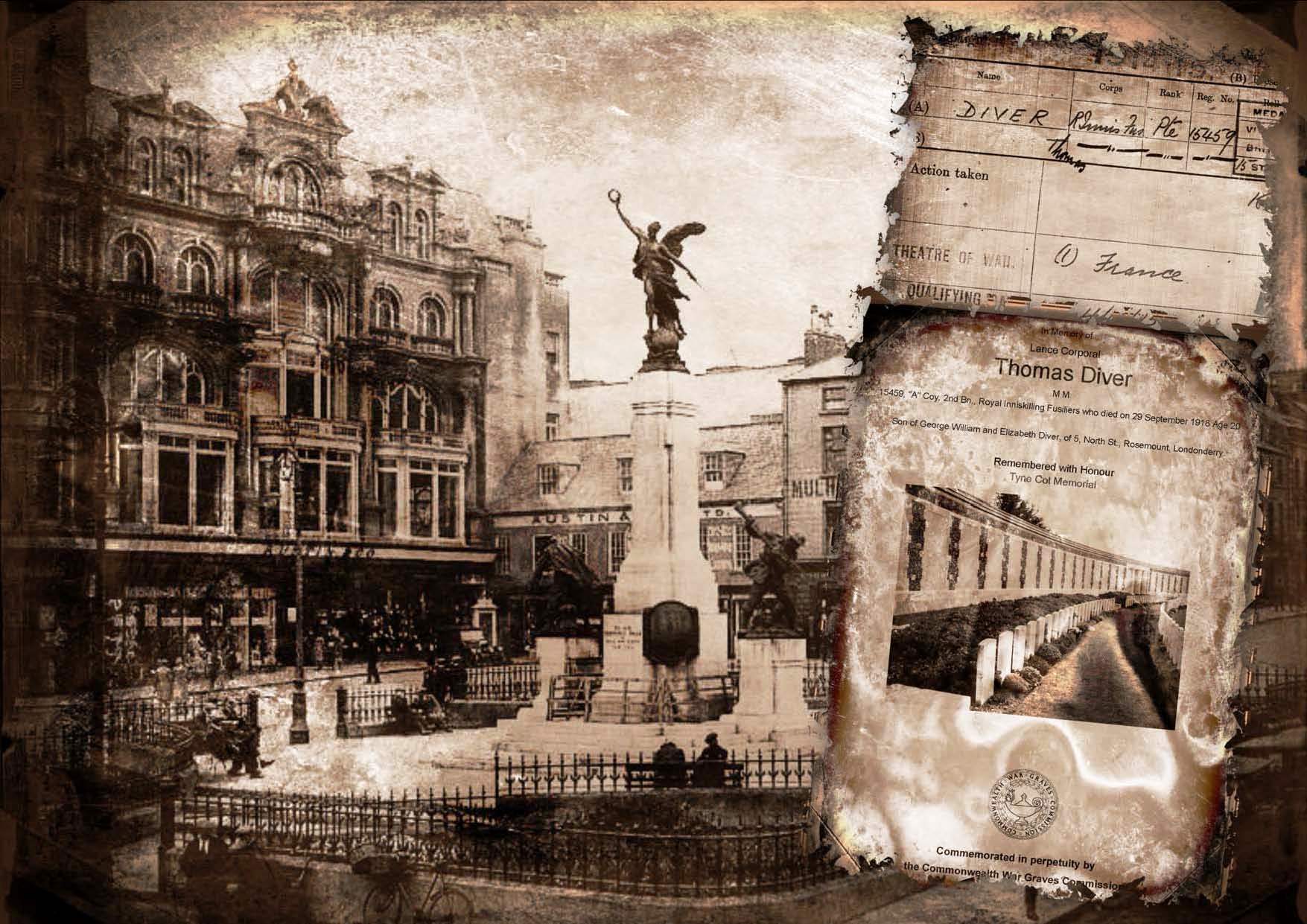 Lance Corporal Thomas Wilson Diver’s name is recorded on the Tyne Cot Memorial, Zonnebeke, West Vlaanderen, Belgium and Commemorated in Perpetuity by the Commonwealth War Graves Commission. His name is also among those listed on the Diamond War Memorial in Londonderry.
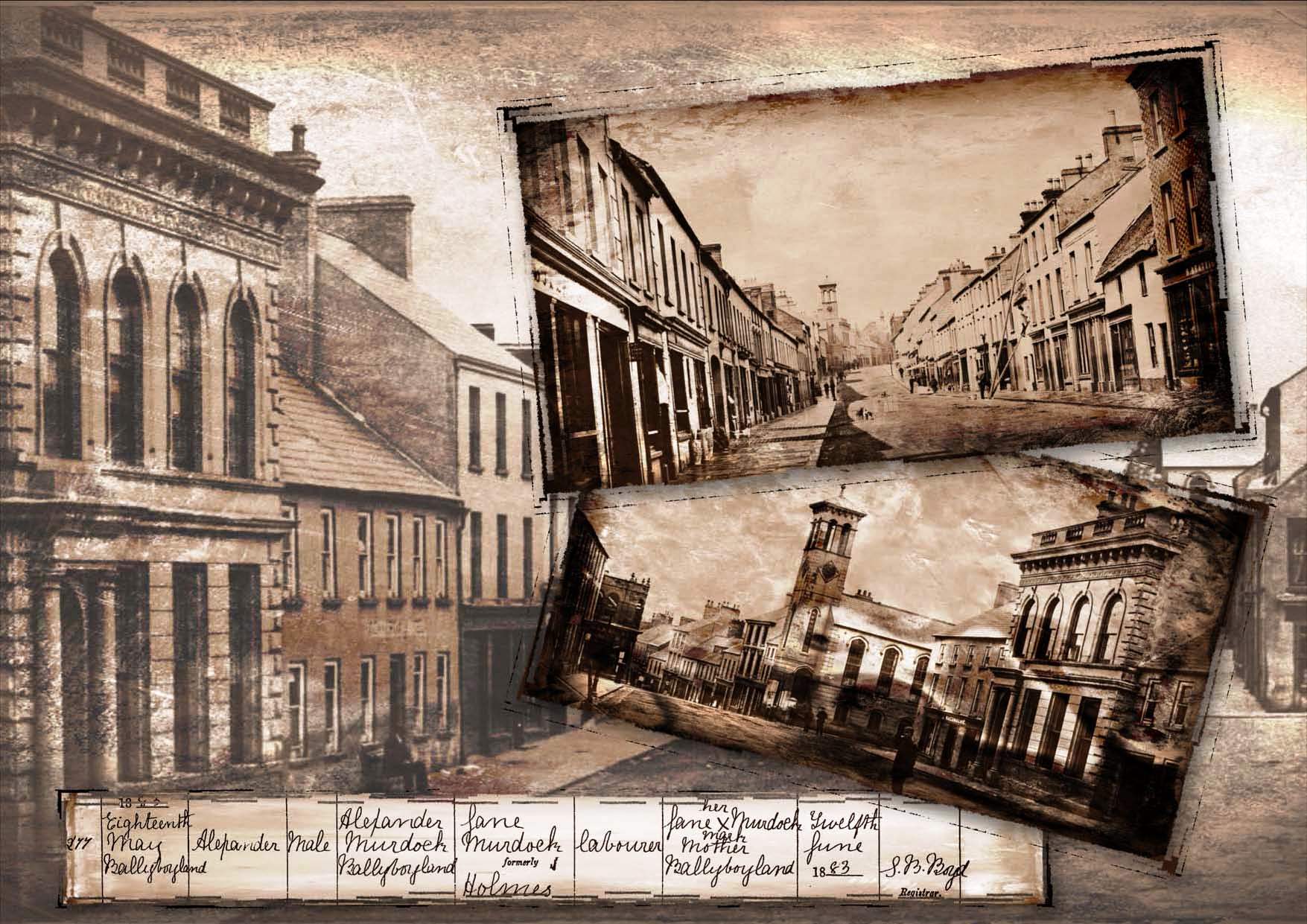
 He was the fourth child and 3rd son of Alexander and Jane Holmes. His parents married in the Ballymoney Reformed Presbyterian Church on 7 Jun 1877. His older sister Annie was born in 1878, Alexander (the first) in 1879, who didn’t survive childhood, and Archie in 1881. Sadly, just before Alex’s sixth birthday, on 15 Mar 1885, his mother passed away at the very young age of thirty. She left behind her husband and her three children who where all under the age of eight.
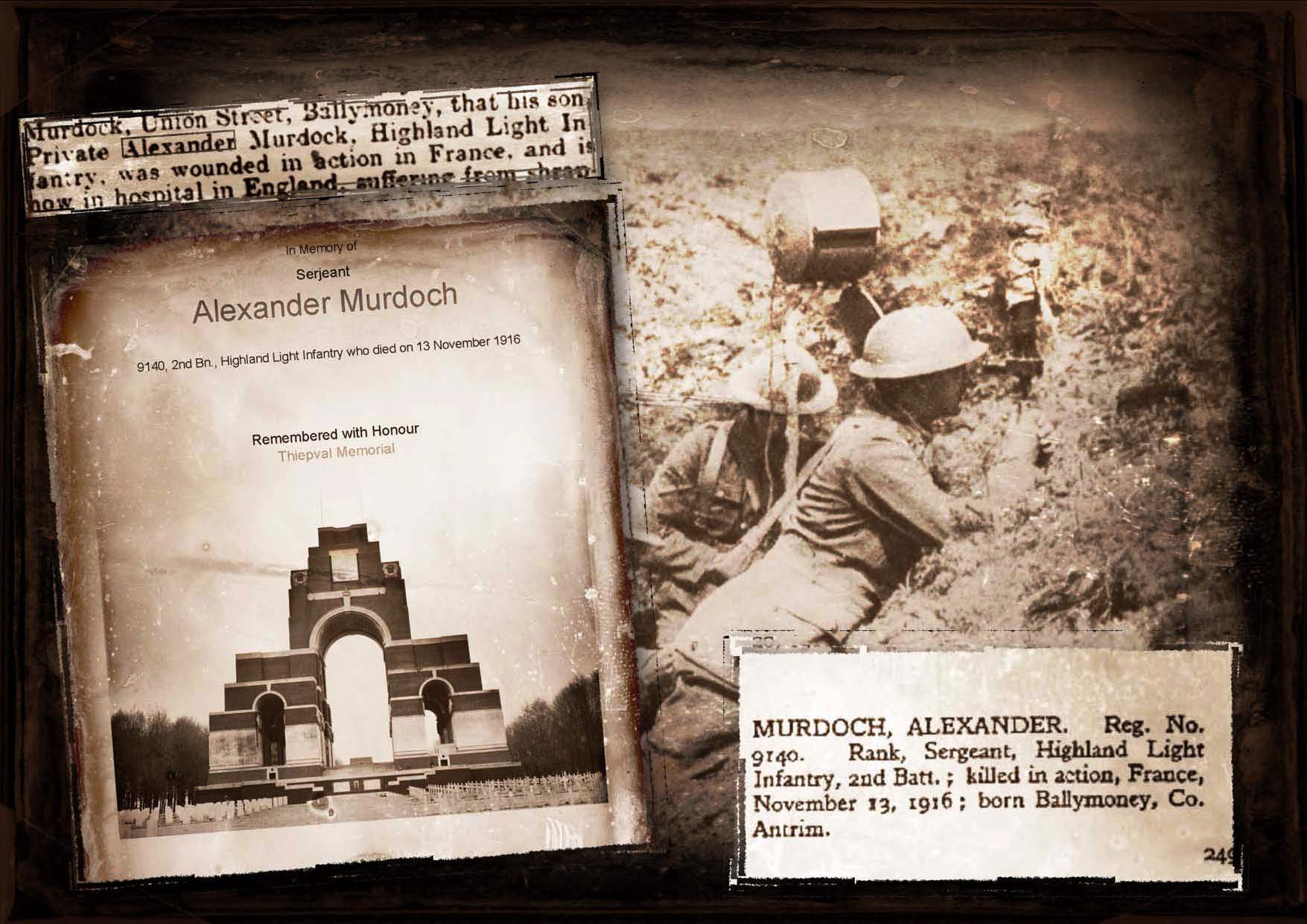
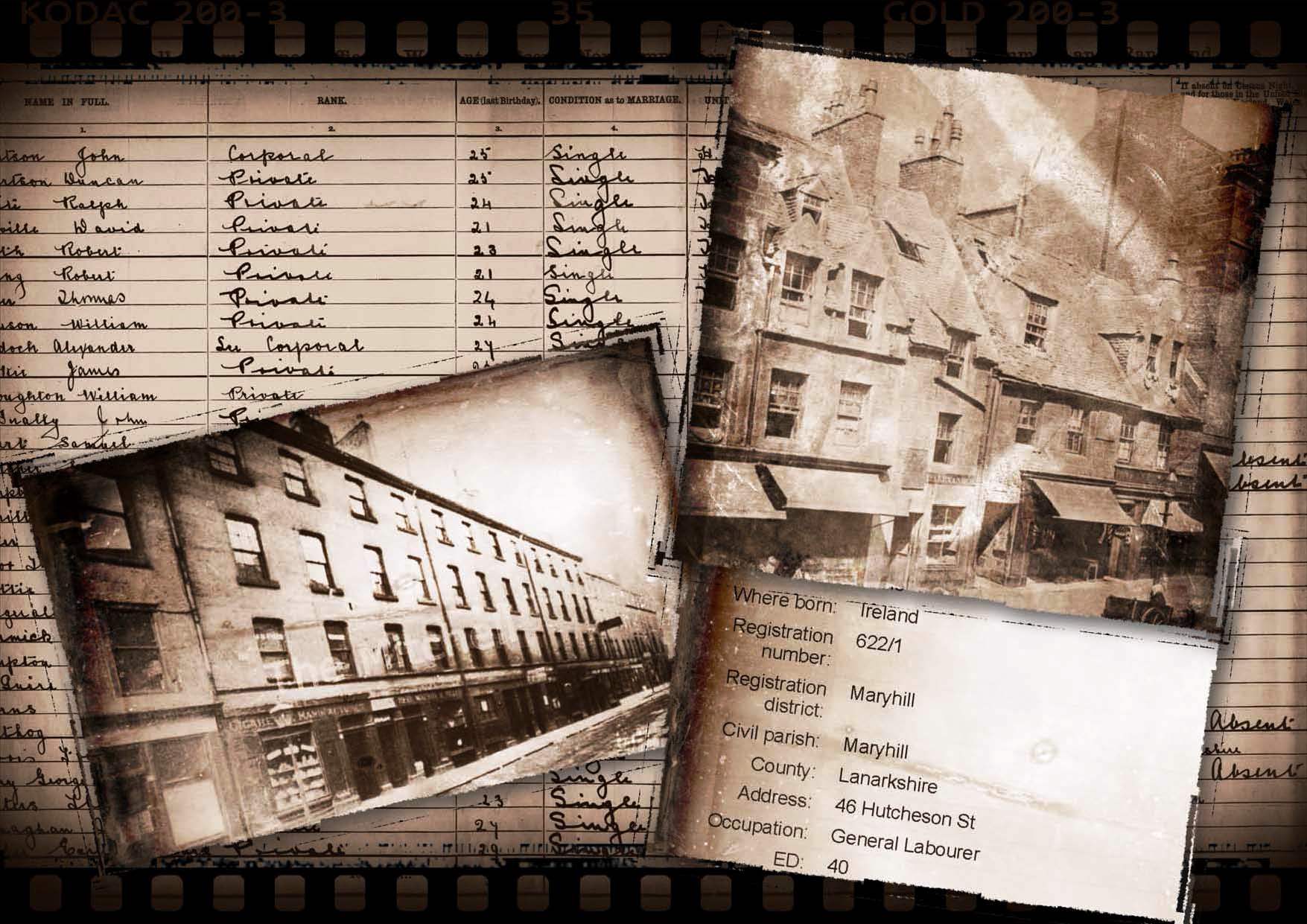 An excerpt from “Ballymoney Heros” by Robert Thompson stated: “In January 1916 Alex was in hospital suffering from injuries but was improving and looking forward to ten days leave. I have been unable to trace the family of Alex Murdock but he was with his battalion north of the River Ancre in October 1916.
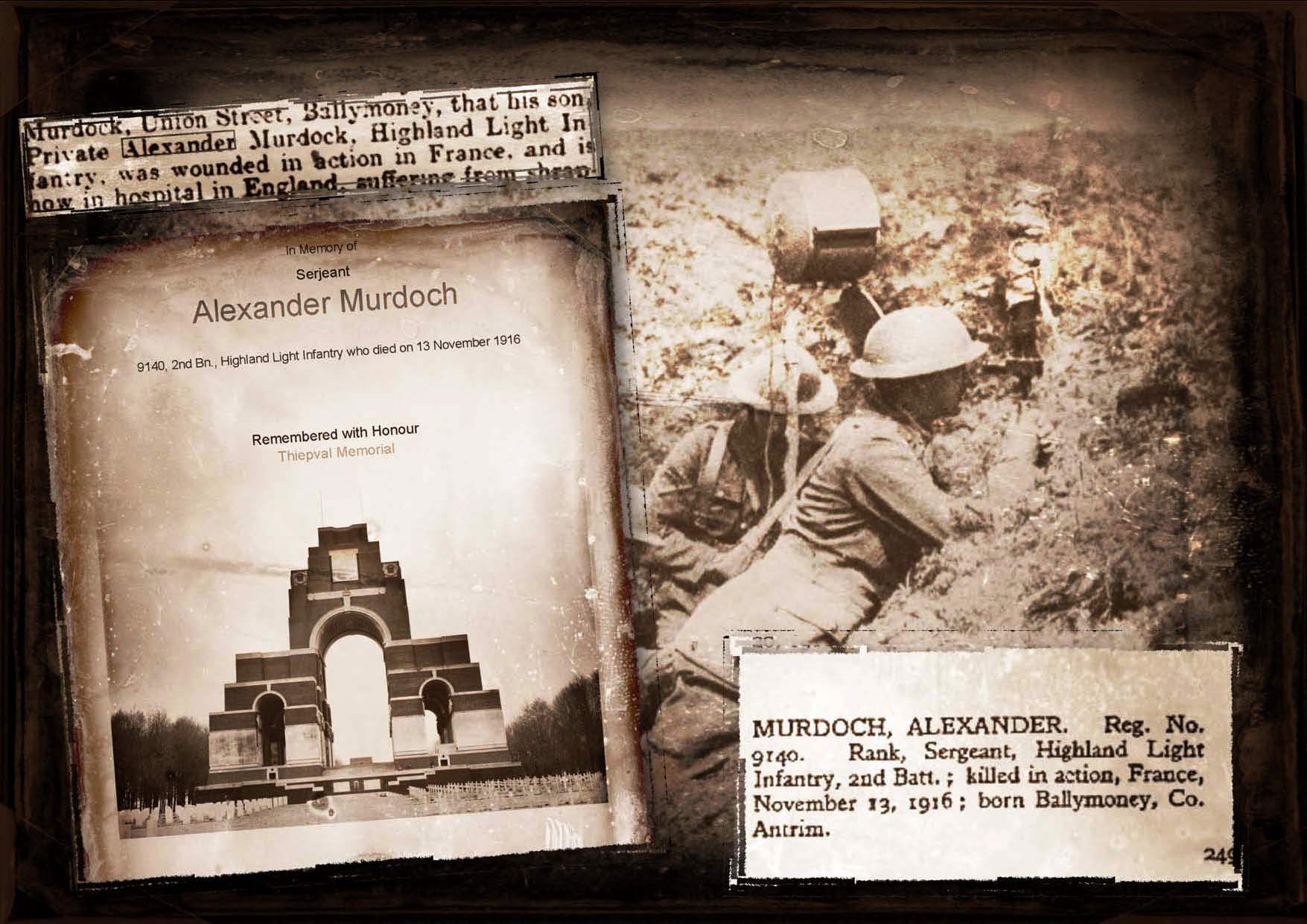 9140 Serjeant Alexander Murdock, 2nd Bn Highland Light Infantry who was Killed in Action 13 Nov 1916 is remembered in “Ireland’s Memorial Records – Soldiers Who Died in the Great War” – he is Remembered with Honour and Commemorated in Perpetuity in Thiepval Memorial, Pier 15 C.










 TWISTED LIMBS & CROOKED BRANCHES