Unexpected Emotion…

When starting my journey back in time I wasn’t prepared for, nor had I expected it to be, an emotional trip!  In fact, I hadn’t even considered it.  Of course while collecting photos of my family who were more recently deceased, that I knew would bring up emotion; which it inevitably did.  However, to feel a sense of sadness or pain for a great great grandparent who died in 1894; that I certainly hadn’t expected!

Walking I Am Listening....

Walking I Am Listening….

My paternal second great grandmother was Agnes Ann Beatty.  Although I have yet to find her birth record, other documents point to the fact that she was born about 1839 in Co. Antrim, Ireland.  Agnes Ann married Robert Berry in the Lisburn Cathedral on the 27th of October 1860.  The witnesses at their wedding were William and Sarah Ann Crothers.  Their marriage record shows that Agnes Ann was residing in Clogher, Co. Antrim and she was a weaver by trade.  Clogher is a small Town land in the Parish of Billy, Co. Antrim; not to be confused with Clogher, Co. Tyrone.

Library Ireland states:  “Ballymacarrett, a town and parish, forming part of the suburbs of BELFAST, in the barony of UPPER CASTLEREAGH, county of DOWN, and province of ULSTER; containing 5168 inhabitants. This place, previously to 1825, was simply a townland in the parish of Knockbreda, or Bredagh, and in the history of the county, published in 1744, is described as containing only two buildings, Mount Pottinger and a mill. It is now become a populous and flourishing town, occupying a site formerly covered by every tide, but which has been reclaimed by an extensive embankment stretching from Conswater westward to the river Lagan, opposite to the quays of Belfast, and thence on the shore of that river to Ormeau, the splendid residence of the Marquess of Donegal.”  

Another article I came across describes the 1800s Ballymacarrett this way:  “Weavers in Belfast had been reduced to a state of total destitution.  The situation was worse in Ballymacarrett with almost half being out of work”.  “The Belfast News-Letter reported that the weavers in Ballymacarrett were obliged to eat “oatmeal unfit for cattle” and were reduced to skeletons due to over-work and lack of sleep”.  “The physical condition of Ulster’s weavers’ was worse than any other class of Irishman”.  “The state of destitution and wretchedness to which numbers of the working class of the population were reduced by absolute poverty was inconceivable to those who had not witnessed it”.

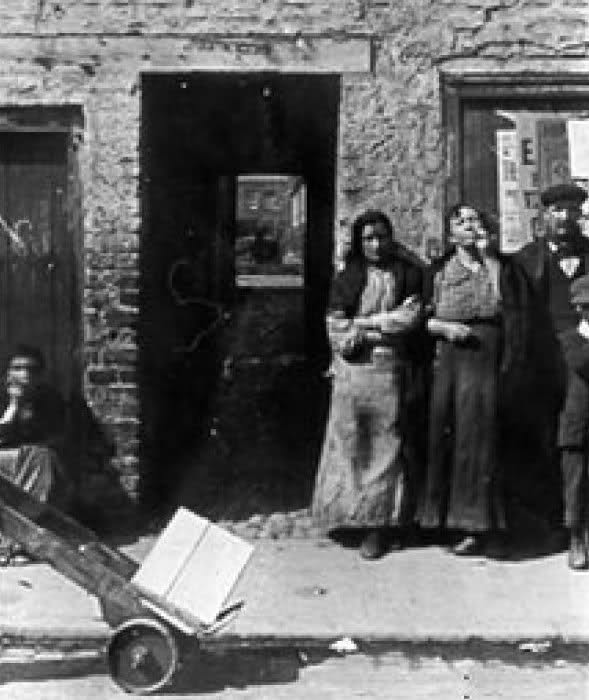
My cousin came across this photo and I thought his description was fitting!
Berrys

A Moment In Time

He said, “I have come upon a particular photo which sums up exactly how I think Robert and Agnes lived as the little people dwelling in the lower rent sector and not important enough to be named in the Directories. The poor, ignored and uneducated who, the Authorities deemed, were unable to contribute to society.”

Agnes Ann and Robert had at least four children that I am currently aware of; one being James my great grandfather.  James birth certificate in 1864 shows the family living in Lagan Village, Ballymacarrett; which was, at that time, on the outskirts of Belfast.  Agnes Ann and Robert were still residing in the same area in 1866 when their daughter Sarah was born. 

Early 1900's Belfast

Early 1900’s Belfast

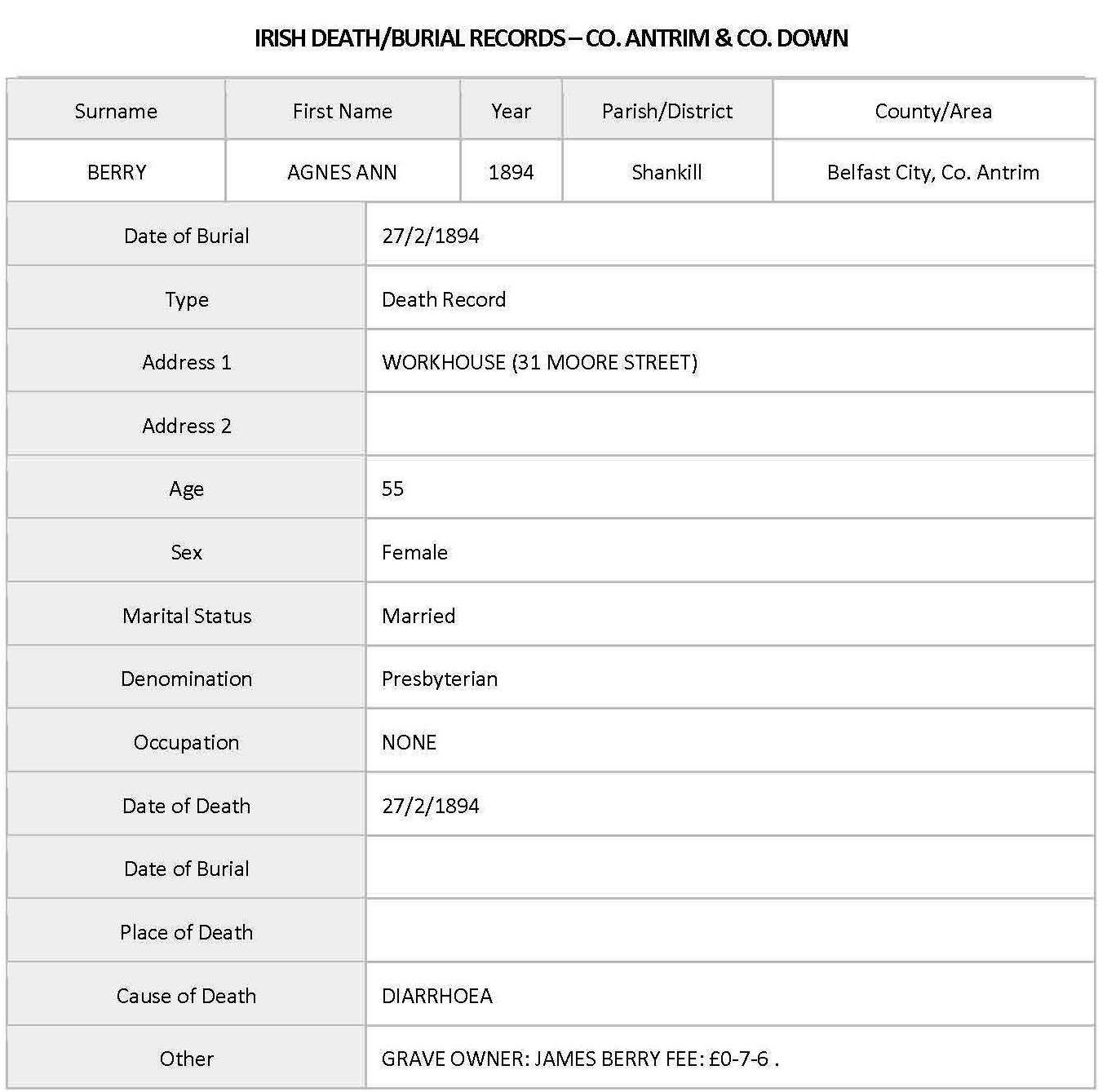
Agnes Ann did not live a long life and from everything I’ve read it was a difficult life.  She passed away on 27 Feb 1894.  This is what I found when locating her Death Record:
Death Record

Since Workhouse and 41 Moore Street (incorrectly transcribed as 31 Moore Street) were both listed in on her death record, it would suggest that Agnes Ann went into the Workhouse in search of medical attention.  It’s the only sense of solace I can take from her untimely death.

The Workhouse, also known as the Belfast Infirmary , was located at 51 Lisburn Road.
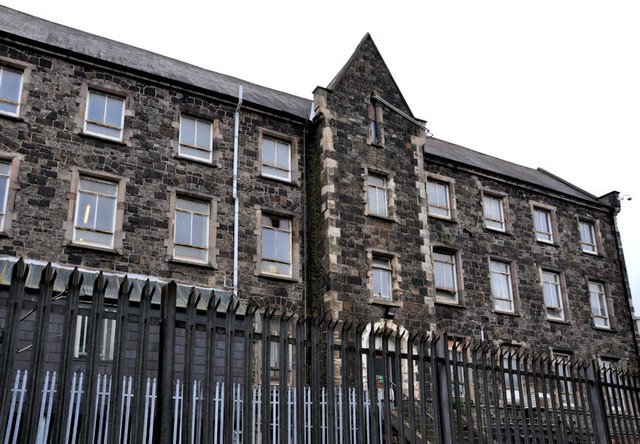
The Workhouse Today
Now Part of Belfast City Hospital

A “friend” who was at PRONI sent me Agnes Ann’s Death Notice which was published in the Belfast Telegraph March 1, 1894.  It read:  “BERRY.  February 27 at 3 Tyne Street, Belfast.  Agnes Ann Berry the remains of my mother will be removed for interment in the City Cemetery on tomorrow (Thursday) afternoon at two o`clock. Friends will please accept this intimation. James Berry”
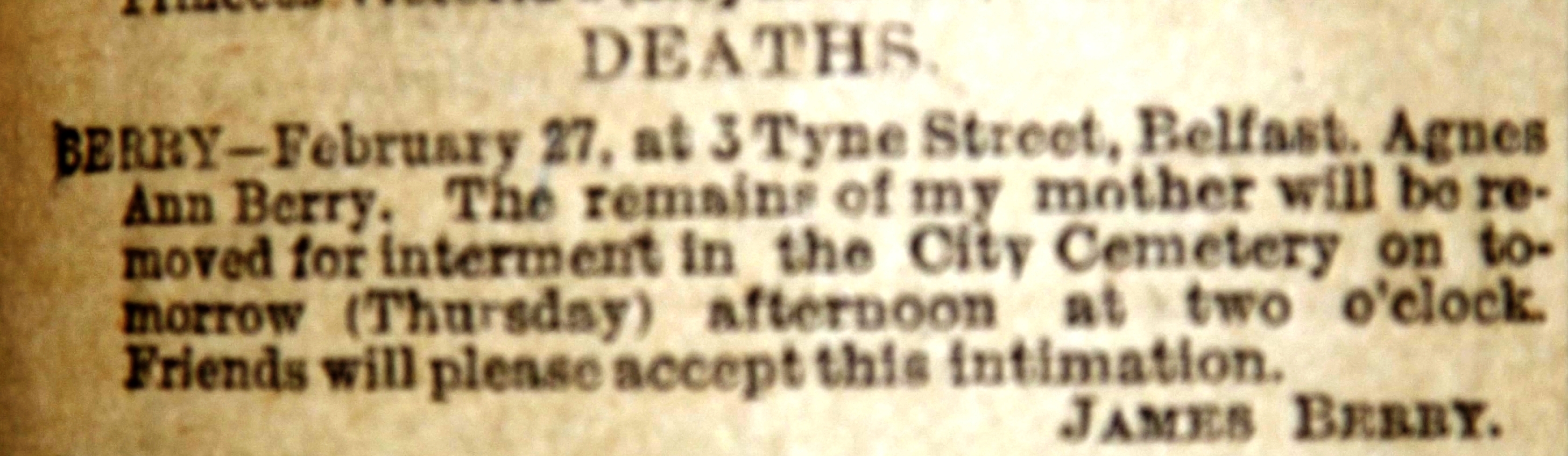
Death Notice

Agnes Ann was buried at the Belfast City Cemetery Belfast, Grave A 492. She is buried with her daughter Sarah Hannah Teuton Berry; also her son in law, James Yeates and her granddaughter, Agnes Berry Yeats.
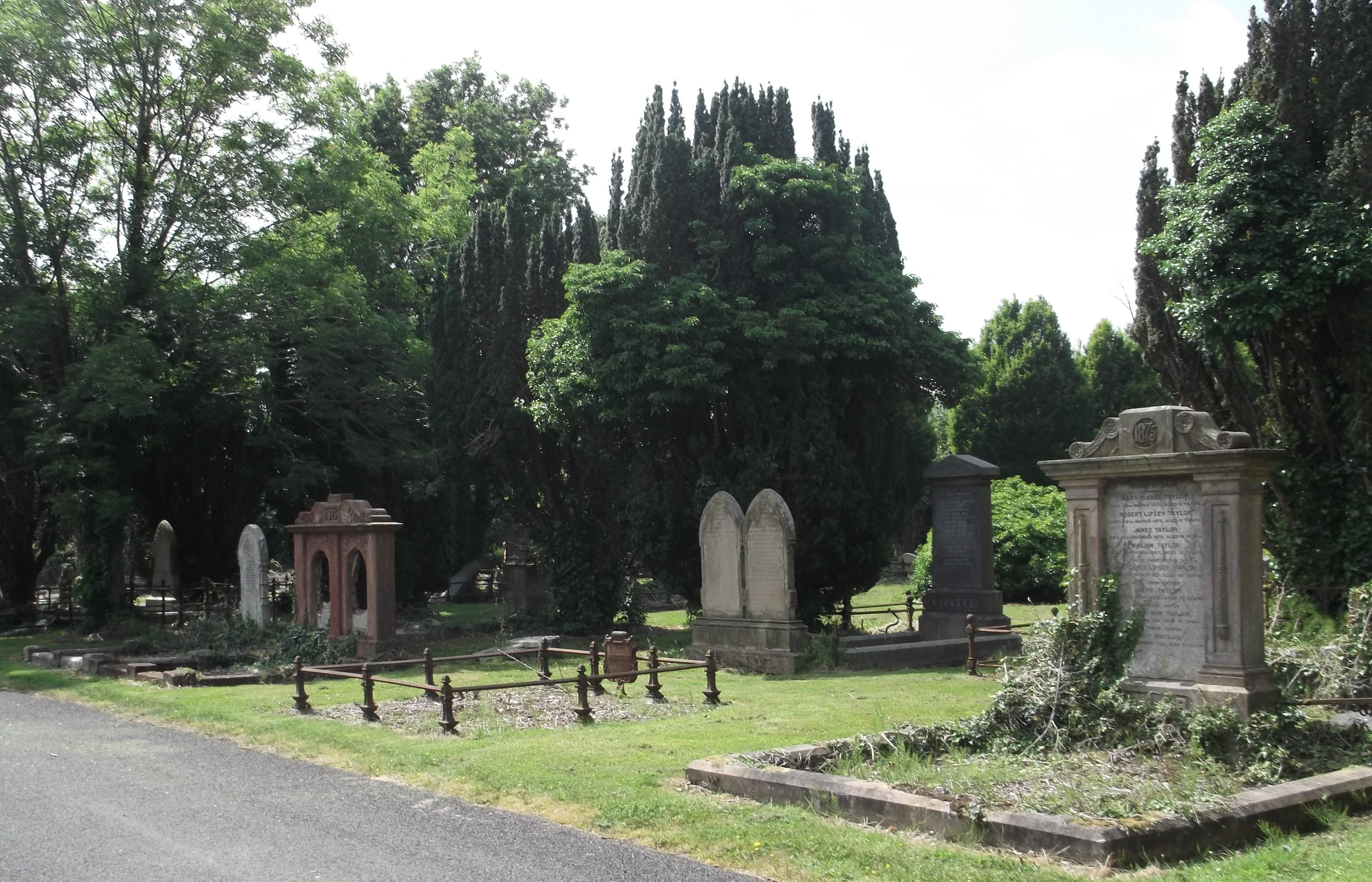
Belfast City Cemetery

Belfast City Cemetery
The Area Where Agnes Ann Is Buried…

Her grave does not have a headstone; although interestingly is in an area of the cemetery where the monuments are very large and must have been rather expensive.  Her husband Robert is not buried with her; nor can I find his death record.  Family history dictates he was a “sea faring man” and died when he “went down with his ship”.  That saga still continues…

Copyright (c) (2014) (https://colleenjmurdoch.worpress.com). All Rights Reserved.
Posted in Belfast, Burial Records, Co. Antrim, Family History, Geneaology, Ireland | Tagged , , , | 5 Comments

A Little Bit Of Heaven

This gallery contains 12 photos.

Have you ever heard the story of how Ireland got its name? I’ll tell you so you’ll understand from whence old Ireland came. No wonder that we’re proud of that dear land across the sea, For here’s the way me … Continue reading

More Galleries | Tagged | 2 Comments

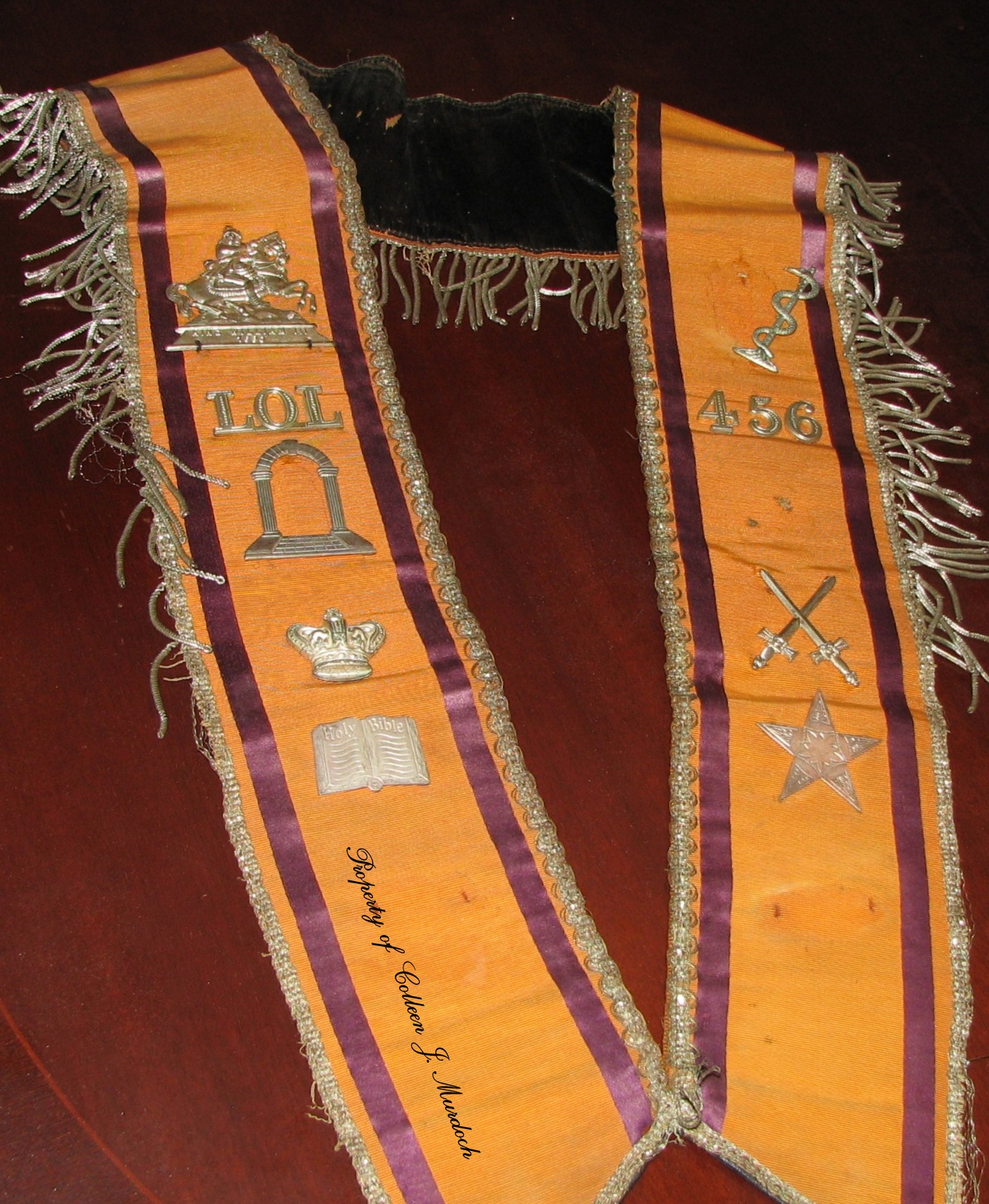
L.O.L. 456 Known as “Murdocks Lodge”!

In my 2012 trip “back home” I amassed a large number of documents, some dating back to the late 1700s; old photographs (some still unnamed); and many photos of family headstones from a variety of cemeteries.  One of the documents I came across was a small booklet entitled “A Short History of Ballymoney Lodges L.O.L 456,954, 956” written by Roy McComb.

Ballymoney is a small town and civil parish in Co. Antrim, Northern Ireland where many generations of my family where born and resided until their deaths.

IMG_3771

“A Short History of Ballymoney Lodges L.O.L 456,954, 956” written by Roy McComb.

I had often heard the story that the Ballymoney Purple Star L.O.L 456 had so many members who were Murdocks it was locally known as “Murdocks Lodge”!  Well, now I have it in writing!

Excerpt from…….

“…During this period the lodge was led on parade by lodge drums, two of which are still in the lodges possession.  “Old Timers” talk of a drum with a brass shell but no one knows of its whereabouts now.  The Murdock Family were great 456 and Lambeg men and looked after the drums.  Bobbie Murdock (my grandfather) and his father Thomas (my great grandfather) drummed while Willie Murdock (my great uncle) fifed.  Indeed they were so familiar a sight when the lodge was on parade the lodge was known locally as “Murdocks Lodge”…

Thomas Murdock - The Sash My Great Grandfather Wore!

Thomas Murdock
The Sash My Great Grandfather Wore!

Robert Murdoch The Sash My Grandfather Wore!

Robert Murdoch
The Sash My Grandfather Wore!

Another excerpt lists Worshipful Masters for the period from 1824 to 1987 and shows that William Murdock (my great uncle) was Master of the Lodge from 1954-1955; and from 1963-1968 Robert Murdock (my grandfather) was Master.

You will notice that I have spelled my great grandfathers name as MurdocK and my grandfathers as MurdocH!  That is purposeful… my grandfather always insisted that his ancestors, who he said “hailed from Scotland”; spelled our name with an “H”!

Copyright (c) (2014) (https://colleenjmurdoch.worpress.com). All Rights Reserved.

Posted in Co. Antrim, Family History, Geneaology, Ireland | Tagged , , | 3 Comments

The “Black Irish” – Who Are We?

Growing up and even into my adult hood I have often been referred to as one of the “Black Irish”; my father calling me his “Black Irish Rose”!  Where did the term come from; or more importantly who am I descended from?  I’ve always believed I wasn’t, or at least didn’t look, completely Caucasian, my father didn’t look Caucasian nor did my paternal grandmother.  I was told a story growing up that my grandmother had been in the Belfast Train Station with my father when a stranger “welcomed them to their new country”!

Image

A Black Irish Rose?

In my many trips back “home” I’ve been questioned about my ethnicity; and some were disbelieving that I was born in Northern Ireland.  However, I was; as were my parents, grandparents and many generations further back in time.

Image

Eliza (Lizzie) Berry, My Paternal Grandmother.
Photo not to be used without prior consent from the author!

In just the last year a 2nd cousin found me through www.Ancestry.co.uk; I hadn’t known he existed; in fact he hadn’t known I existed either!  When I saw his photo for the first time it was very apparent that we were family!  We both have an olive complexion; he has very dark eyes whereas mine are very light; supposedly grey but changing from green to blue!  We most certainly have the same DNA – no tests required!

The Definition of the Black Irish as per http://en.wikipedia.org/wiki/Irish_people

Black Irish is an ambiguous term sometimes used (mainly outside Ireland) as a reference to a dark-haired phenotype appearing in people of Irish origin.[29] Opinions vary in regard to what is perceived as the usual physical characteristics of the so-called Black Irish: e.g., dark hair, brown eyes and medium skin tone; or dark hair, blue or green eyes and fair skin tone.[30] Unbeknownst to some who have used this term at one time or another, dark hair in people of Irish descent is common, although darker skin complexions appear less frequently.[31] The physical traits associated with the term Black Irish are sometimes thought to have been the result of an Iberian admixture.[32] One popular theory suggests the Black Irish are descendents of survivors of the Spanish Armada, despite research discrediting such claims.[33] In his documentary series Atlantean, Bob Quinn explores an alternative ‘Iberian’ hypothesis, proposing the existence of an ancient sea-trading route skirting the Atlantic coast from North Africa and the Iberian Peninsula to regions such as Connemara.  While preferring the term “The Atlantean Irish”, Quinn’s reference to certain phenotypical characteristics (within elements of the Irish populace and diaspora) as possible evidence of a previous Hibernian-Iberian (and possibly Berber) admixture mirrors common descriptions of the Black Irish.[34]

As I was born and raised in Northern Ireland, as were my ancestors, I would disagree with the Wikipedia article that it is a term used “mainly outside Ireland”!

Irish Central states:  “While it at various stages was almost certainly used as an insult, the term ‘Black Irish’ has emerged in recent times as a virtual badge of honor among some descendants of immigrants.  It is unlikely that the exact origin of the term will ever be known and it is also likely that it has had a number of different iterations, depending on the historical context. It remains therefore a descriptive term used for many purposes, rather than a reference to an actual class of people who may have survived the centuries.

The full article can be found here: http://www.irishcentral.com/roots/history/who-were-the-black-irish-92376439-237784721.html

Image

My Father and Me…. Back in the Day!
Photo not to be used without prior consent from the author!

Personally, I proudly consider it a “badge of honour” and am looking forward to tracing my family lines back far enough to find the connection!

Copyright (c) (2014) (https://colleenjmurdoch.worpress.com). All Rights Reserved.


Posted in Belfast, Family History, Geneaology, Ireland, Misc. | Tagged , , , , , , | 14 Comments

Christ Church Derriaghy (Church of Ireland)

Image

© Copyright Albert Bridge and licensed for reuse under this Creative Commons Licence

Another beautiful Church my family is affiliated with.  This stunning church is located on the outskirts of the City of Lisburn in County Antrim.  My Scott, Berry, Waring & Hendren families are connected with this beautiful Church.

Image

© Copyright Albert Bridge and licensed for reuse under this Creative Commons Licence

The name of the parish was stabilized in the eighteenth century as Derriaghy or Derryaghy with minor variations such as Dirriaghie.  Indicating an original Irish form “Doire Achaidh” meaning the oak-wood of the field.

A detailed History of the Church can be found here:  http://www.lisburn.com/books/derriaghy/derriaghy1.html

Posted in Co. Antrim, Family History, Geneaology, Ireland | Tagged , , , , , , , , | 4 Comments

My Great Grandfather – Worked on the Titanic!

James Berry

James Berry

James Berry (my great grandfather) was born on 18 Jun 1864 in Lagan Village, Ballymacarret; which is in the Belfast area.  He married Mary Agnes Scott (known as Mary) on 25 Feb 1893 in the Willowfield Church of Ireland, Belfast.  The witnesses at their wedding were James Stewart and Anne McIlwain. James was a labourer at the time of their marriage and living at 41 Moore Street in Belfast which was his family home.  Mary was living at 44 Westmoreland Street in Belfast.  It has yet to be validated if Mary was living with extended family at this address.

Mary Agnes Scott

Mary Agnes Scott

Mary had been engaged to a neighbouring farmer (had even purchased her wedding dress) in order to increase the size of the family farm; a practice that was very common in that era.  Oral family history indicates that Mary Agnes changed her mind about the marriage and moved to Belfast to work as a midwife.  Since she refused to marry the “neighbour” she was written out of the family Will.  This fact is no longer family lore as it has been proven with a copy of her fathers, Richard James Scott, Will.

James parents were Robert Berry and Agnes Ann Beatty from Ballymacarret, Co. Down.  Mary’s parents were Richard James Scott and Mary Agnes Hendren who were from the Stoneyford, Co. Antrim area.

Through the years James worked as a gas fitter and plumber and had his own plumbing business where he had several employees.  He and many of his friends worked on the Titanic when it was being built at the Harland and Wolff shipyard in Belfast.

They had eight children; Mary (who died as an infant), Mary Agnes, Frances (who also died very young), Robert, Richard (Dick), Frances, William (Willie) and their youngest daughter was Eliza (Lizzie) Berry and my grandmother.

James and Mary lived in Belfast for the duration of their lives.  Initially living at 3 Tyne Street; this is believed to be their first home together.  Later at 7 Cherryvale Street, which was renamed Cherryville Street, and eventually purchasing 41 Cherryville Street where they resided from 1901 until their deaths.  James died on 17 Nov 1930, and Mary passed away on 12 Aug 1939.  They are both interred at St. John’s Parish Church Graveyard in Stoneyford, Co. Antrim.

Stoneyford Church of Ireland

Stoneyford Church of Ireland

Copyright (c) (2014) (https://colleenjmurdoch.worpress.com). All Rights Reserved.


Posted in Co. Antrim, Family History, Geneaology, Ireland | Tagged , , , , , | 3 Comments

St. Columb’s Cathedral – “My Granny’s Church”!

Image

St Columb’s Cathedral is near and dear to my heart; I often refer to it as “My Granny’s Church”!  My family has been affiliated with the church for decades.  Many were married, baptized and confirmed at the church.  Some were in the choir, while others taught Sunday school; a few teachers in the family taught in the Cathedral School which was affiliated with the church.

St. Columb’s can be found in the walled city of Londonderry, Northern Ireland.  The Cathedral is the mother church of the Church of Ireland Diocese of Derry and Raphoe and the parish church of Templemore.

It is dedicated to Saint Columba, an Irish Monk who established a Christian settlement in the area before being exiled from Ireland and introducing Christianity to Scotland and northern England

It is said that the Cathedral is haunted by William Higgins, a former bishop, predecessor of the renowned Bishop Alexander. Originally buried outside the Cathedral, Bishop Higgins’ tomb ended up inside the Cathedral after the extensive restoration of 1867. In completing the renovation, his final resting place was apparently disturbed; leading to the folk lore that he still frequents the Church.

Staff has heard footsteps in the gallery; upon going to check they found the door to the gallery locked. There was also an occurrence with the organ. The original organ had been vandalised and an electric replacement had been installed.  It was this organ that began to produce a noise when the power was turned off!  All reports indicate the ghost to be friendly!

Copyright (c) (2014) (https://colleenjmurdoch.worpress.com). All Rights Reserved.


Posted in Family History | Tagged , , , , | 1 Comment

The “Inner Circle” – Can the Barrier be Broken?

A Beautiful Lady... Who Is She?

A Beautiful Lady… Who Is She?

Definition of the “The Inner Circle”:  http://dictionary.reference.com defines the Inner Circle as “an exclusive circle of people with a common purpose”; http://www.collinsdictionary.com says, “a clique or a group of people or who share a common interest, aim or purpose”; whereas http://www.oxforddictionaries.com states it’s “an exclusive group close to the centre of power of an organization or movement, regarded as elitist and secretive”!

Well, after many years of researching my family tree in Ireland I lean towards the Oxford Dictionaries definition:  “an exclusive group close to the centre of power of an organization or movement, regarded as elitist and secretive”! Or to edit it just slightly …; “a group who think they are an exclusive group close to…”!

I’ve always believed in sharing information with others; which I think is why websites like www.Ancestry.co.uk work; especially when we are researching common ancestors.  We each may have different strengths or talents; some of us are good at research or have an abundance of family records; and others, more conveniently geographically located to a particular research area, may be well suited, for example, to go directly to a records office such as PRONI, the National Library in Belfast or to the Belfast Cemetery to take a photo of a headstone.

I have been incredibly lucky to have many kind people offer to take a photo at a cemetery; or another who sent me the Death Notice of my 2nd great grandmother; without being asked.  To those individuals I am much indebted and am very thankful.  They have provided me information that I might otherwise not have had, since I live on the other side of the Atlantic!  As Karma would dictate, I shall be happy to aid them in any way possible and at any time.

Then … there are those who “close ranks”; with a resounding echo.  Usually after they have acquired as much information as possible from this particular well!  This is something I’ve never quite understood.  Are we all not working towards the same end, the same common goal?  Would we not accomplish more in aiding one another, rather than slamming closed the proverbial door?  I, for instance, have many beautiful photos of family gleaned from my grandmother and great aunts photo albums.  Unfortunately, they are not named.  Would it not benefit others to share information in order that we can collectively find out whom our common ancestors are and in turn attach a name to the photo?

How do we break the barrier? How do we help one another move back in time?

Copyright (c) (2014) (https://colleenjmurdoch.worpress.com). All Rights Reserved.


Posted in Belfast, Co. Antrim, Co. Down, Family History, Geneaology, Ireland, Misc. | Tagged , , , , , , | Leave a comment

North of Ireland Family History Society

One to look out for! Good news about forthcoming online service for birth, marriage & death records from Northern Ireland

February 7, 2014 at 1:04pm

Firstly a little background: in Ireland, civil registration started in 1845 for some marriages & was extended in 1864 to cover all births, marriages & deaths, so those are the starting dates for records that GRONI holds (the General Register Office for Northern Ireland).

GRONI have in recent months started to reach out to the community & if you have been at one of their talks then you’ll have heard about their imminent new search system, but have you seen the legislation about proposed prices? For everyone else, there are some more tempting details available about the new online search facility for Northern Irish BMD records.

Recent Wednesday lunch-times have seen a well-attended series of family history talks at PRONI. This week’s talk was by Alistair Butler from GRONI. In the main, the talk covered information about how GRONI can help genealogists grow their family trees. Later the talk covered the fact that GRONI spent about 3 years & a lot of money digitising their records. A by-product of the registration efficiency-drive, is that GRONI will shortly be able to offer a “ScotlandsPeople” type service to genealogists. After the talk, a little on-line digging for the legislation showed that the proposed costs seem VERY favourable compared to the existing situation.

The draft legislation “The General Register Office (Fees) Order (Northern Ireland) 2014” was published on 24th January & has yet to be approved by the Assembly.  However, if it remains unchanged, it seems that the earliest the new fee structure, & therefore presumably the new system, can go live is 10th March 2014. Going back to the talk, Alistair did say that the new system is currently undergoing testing & that while there is no firm release date yet, he did hope that the system will go live before April. He said that there will be extensive publicity about the go-live date & also noted that detailed help notes will be available.

  • The index includes ALL the bmd records that have been registered with them from 1845/64.
  • For those not visiting the GRONI offices but searching from home, only “historic” records will be available. This means: births – over 100 years, marriages – over 75 years, deaths – over 50 years.
  • More recent records, ie right up to current registrations and after the 100/75/50 year cut-off dates for online access, will be available via computers in the Search Room at GRONI in Belfast.
  • The basic index search will be free & has limited details such as the year of the event & some names to hopefully narrow down the results. An enhanced search is chargeable & will show the actual date as well as more names & details such as ages.  You can then decide whether or not to pay to view the actual record.
  • There will be an option to automatically search for name variants eg to search for Smith & Smyth in case different spellings were used.

And now for the best bit! The draft legislation shows that the proposed costs for the on-line records are much lower than current prices (albeit current prices are for an official, stamped paper certificate).

  • For anyone who visits the GRONI offices, the cost of using the Search Room facilities will reduce from £14 to £7 per day. The current verification process will be replaced by personal access to records via the computer terminals, ie this should be much quicker.
  • According to the draft legislation, the basic index search will be free, the enhanced index search will cost 1 credit (£0.40) and viewing an actual record will cost 5 credits (£2.00)
  • It also seems that the search element of the current fee for an actual certificate will be removed as the price of a certified paper certificate will drop from £15 to £8 (if ordered on-line quoting its unique reference number).

In other words, it will, in the very near future, be much simpler, quicker & cheaper to trace ancestors from Northern Ireland than ever before! Fantastic news!

NOTES:

Link to the draft legislation: http://www.legislation.gov.uk/nidsr/2014/9780337992551

Posted in Family History | Tagged | Leave a comment

Reasons For Admission…

“Insane Asylums”!!

In researching my family tree on one of the websites I frequent…. I found this document, entitled “Reasons for Admission: 1864-1889”. How many of us would have been already “locked up”?

Reasons For Admission...

Reasons For Admission…

Posted in Family History, Misc. | Tagged , | Leave a comment