The “Wee Church on the Walls”

The Beautiful Little Church where my great grandparents, Johnston Alexander Love & Isabella Fisher Chambers married on October 5, 1903.

Early History of St. Augustine’s Church Londonderry

St Columb (St Columba, St Colmcille ) was born c 522 AD at Gartan, Co Donegal, came to Derry in 546 AD and founded a monastery in the area on the side of the hill of Derry where St Augustine’s Church now stands. St Columb had been a student of St Mobhi at Glasnevin, Dublin and he came back to Daire Calgach (the ancient Irish name for the area) when his cousin offered him land to build a church. At the time the area was covered with oak trees from which Derry gets its name i.e. Doire, the grove of the oaks. After he left Derry in 563 AD for the Scottish island of Iona he only returned to Ireland once in 575 AD to attend the Convention of Drumceatt which was held near Limavady, about 15 miles (24Km) from Derry. Tradition is that he died on 9th June, 597 AD and that day is still celebrated in the City of Londonderry. Over the centuries the site was raided many times and some recorded dates are:

• 1059 AD – ” the old abbey erected in 546 AD, consumed by fire”

• 1136 AD – ” the Abbey and all the town consumed by fire ”

• 1397 AD – The records of the pastoral visit of Archbishop Colton show that he was lodged with the Augustinian Canons (the monastery had been taken over by the Augustinian Order on the decline of the Columban Order). They also give an insight into the daily running of the monastery. Little more is known until 1600. Queen Elizabeth I sent an army under the control of Sir Henry Docwra to settle Derry in May of 1600.

• A map made seven months later in December 1600 gives a good idea of the layout of the old settlement around which Docwra founded a new city. Sir Henry Docwra records in his narration that a hospital and lodgings were made amongst the ruins of the old abbey and he and his people used the old church for worship.

• By 1633 the new cathedral church had been built and the congregation moved from ” The Wee church ” and it is believed that it was then used by the Presbyterian people during the great siege of 1689. During the siege many buildings were damaged by cannon balls and mortar shells. One such shell landed in the graveyard of the church raising five corpses, one of which was blown over the City wall. It is recorded that they were re interred by gentlemen of the City. The old building survived until the 1760’s when the then Bishop of Derry, Doctor William Barnard had it rebuilt. At this time it appears that the title ” Chapel of Ease ” came into use.

• Bishop Barnard’s church continued in use until 1871, when it was deemed to be unsafe and with the consent of the congregation and the Chaplain, the Rev Thomas Lucas Scott, it was rebuilt in its present form.

• The new church was consecrated on 11th June 1872 by Bishop Alexander as St Augustine’s Church and is still in regular use.

Extract from:  http://www.saintaugustines.co.uk/index.php/our-history

Copyright (c) (2014) (https://colleenjmurdoch.worpress.com). All Rights Reserved.


Posted in Family History | Tagged , , , | Leave a comment

The Dark Hedges

The Dark Hedges

The Dark Hedges, near Armoy and Ballymoney, Co. Antrim, Northern Ireland. The Dark Hedges is a relatively short avenue (about half a mile long) in Northern Ireland’s county Antrim, and about two centuries old. The 150 trees – beech trees – were planted in the 18th century by James Stuart to impress those who came to visit them in or at their home, Gracehill House – which, by the way, was named after James’s wife Grace Lynd. The trees are now protected by the Northern Ireland planning service. However, it is said that the beauty of the avenue is somewhat disturbed by the sheep wire fence that was planted on both sides recently.

Legend goes that the Dark Hedges is haunted by a “Grey Lady”. One story says the lady is the ghost of a maid who died under mysterious circumstances centuries ago, another story says she is a lost spirit from a nearby hidden graveyard. She appears at dusk and glides along the trees, only to disappear as she passes the last tree.

Posted in Co. Antrim, Family History, Ireland, Misc. | Tagged , , | Leave a comment

Burial Records – A Great Resource

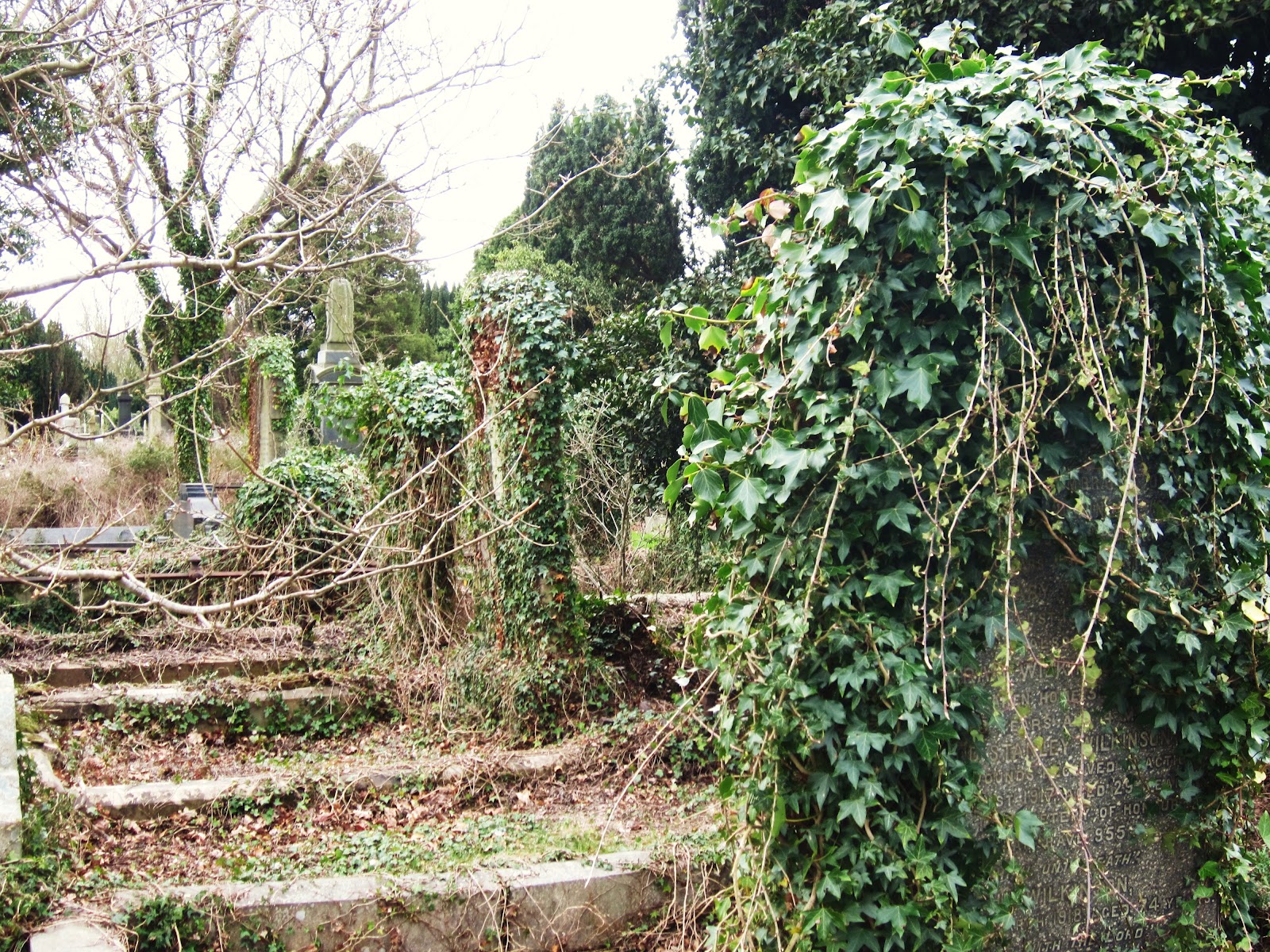
ImageWhen researching ancestors a great resource are burial records.  The records tend to show date of death, burial date, residence at time of death, grave number and often the proprietor of the grave.  They also show all occupants of the grave which can lead us to more of our ancestors.  At no cost records are available online for the Belfast area from 1869 onwards.  Approximately 360,000 records are available for the Belfast City, Roselawn and Dundonald Cemeteries.  The records can be found here:  http://www.belfastcity.gov.uk/community/cemeteries/belfastcitycemetery.aspx

 About The Cemetery

 “Belfast City Cemetery is one of the oldest public cemeteries in Belfast.  It was purchased in 1866 by Belfast Corporation (now the council) and was officially opened on August 1, 1869 as the city’s first municipal burial ground. “

History

 “The cemetery provides an important insight into the history of Belfast.  It is a recognised historical site and shows many fine examples of Victorian, Edwardian and Gothic revival architecture.

A number of sections in the cemetery were used for the burial of the poor.  These paupers’ graves have no headstones or any other form of grave marker. There are many thousands of children buried in these sections, which hold 80,208 remains in total.

Land was first acquired for a Jewish burial ground within Belfast City Cemetery in January 1871.  It was accessed via a separate entrance on Whiterock Road.  Above the gate, which is now bricked up, you can still read the Hebrew inscription that marked this area of the cemetery.  Translated, it means ‘the house of life’ or ‘house of the living’.  The area also contained a small Tahara, similar to a synagogue or chapel, which was destroyed by vandals in the 1970s. “ From the Belfast City Council’s Website

Posted in Belfast, Burial Records, Free Genealogy Websites, Geneaology, Ireland | Tagged , , , | Leave a comment

Dunluce Castle….

This colorized photochrom print was taken in the 1890s. ~ "May the best day of your past, Be the worst day of your future."

This colorized photochrom print was taken in the 1890s. ~ “May the best day of your past, Be the worst day of your future.”

The ruins of Dunluce Castle “now” in Ireland.

The ruins of Dunluce Castle “now” in Ireland.

The limestone cliffs of the White Rocks ends abruptly against a dark basalt outcrop which is majestically crowned by Dunluce Castle and joined to the mainland by an arched walkway. Underneath lies the Mermaid’s Cave with its legend of a lost soldier taken to the deep by a beautiful mermaid, other stories tell of smugglers and Spanish treasure.

Dunluce Castle is one of our heritage gems, its outline provides an iconic view of this part of the Causeway Coastal Route. It is frequently quoted as being one of Ireland most romantic castle locations.

The castle has seen many additions to its original structure over the centuries, it fell into disrepair after the last resident, Randall McDonnell, the second Earl of Antrim moved to Ballymagarry House in the mid 1600s. In the 1745 Ballymagarry House was destroyed by fire and the seat of the Earl’s of Antrim moved to its present location at Glenarm Castle.

Close by is the ancient ruins of St. Cuthbert’s named after a Northumbrian monk, it is also the possible burying place of sailors and noblemen from the Spanish Armada. On a clear day you can look over an expanse of ocean from here to Donegal and round to Islay, it was within this vista that the tragedy of the emigrant ship the Exmouth took place in April, 1857, bound for Quebec, she spent three days in horrendous sea conditions before finally breaking up on rocks off Islay with the loss of 240 lives. — at Bushmills, Co. Antrim, Ireland.

Posted in Ireland | Tagged , , , | 4 Comments

Love – Chambers Connection

Chambers - Love Headstone

Chambers – Love Headstone

Isabella Fisher Chambers (known as Bella) married Johnston Alexander Love (known as Alex); my great grandparents. Bella’s parents were John Chambers and Catherine Johnston.

John was born about 1845 in Glasgow, Scotland. He married Catherine in St. Columb’s Cathedral on 13 Sep 1870. Witnesses at their wedding were Adele Doherty & John Barr.

John was a car driver as per their marriage certificate. It shows that his father was Daniel Chambers who was a printer by trade.

I’ve since discovered his mother was Mary Kelly.  Catherine was born in Lough Eske, Co. Donegal and her parents (my 3rd great grandparents) were John Johnston and Isabella Smyth.  John & Catherine’s first daughter, Bella, was born in Ardnableask, Lough Eske, Co. Donegal in 1872. They had 2 more daughters; twin girls (Catherine & Mary Ann) who were born in Londonderry in 1874. They also had a son named Fred, who we understand was adopted; however, I haven’t been able to locate him yet. John died on 16 Nov 1906 at his residence at 113 William Street.

Catherine died on 14 Mar 1912 in 12 Victoria Street. Catherine was living with her daughter, Bella and her son in law Alex! That address has been in the family for decades!  Both are interred at the Derry City Cemetery; Grave No. SB17; purchased by John Chambers.

Copyright (c) (2014) (https://colleenjmurdoch.worpress.com). All Rights Reserved.


Posted in Family History, Geneaology, Ireland | Tagged , , , | 1 Comment

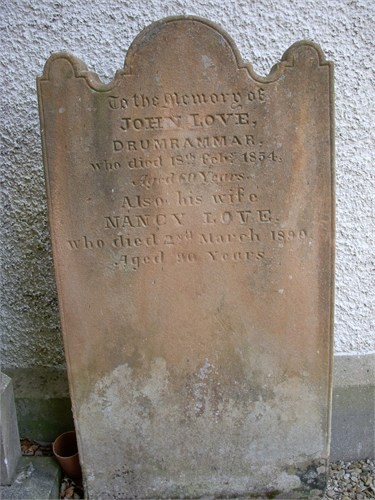
My 3rd great grandfather John Love was born somewhere between 1790 &

John Love & Nancy Anne McAlister Headstone

John Love & Nancy Anne McAlister Headstone

1795 in Drumramer, Co. Londonderry; which is the Limavady area! He married Anne McAlister (known as Nancy) 2 Dec 1882 at Christ Church Drumachose Church of Ireland. He died 18 Feb 1854; Nancy died 21 Mar 1890. They are both buried in the Love Family Plot at Limavady, Drumachose Church of Ireland; Plot 11/14.

They had 7 sons & 2 daughters; one of their sons was John Love our 2nd great grandfather. He was christened 7 Mar 1830; so presumably born Feb of that year. John married Leah McLaughlin at the Killowen Church of Ireland in Coleraine 3 May 1865. At some point they moved to Londonderry and had 5 sons & 4 daughters; also raising a niece (Leah) as their daughter. John died 28 Oct 1907 and Leah on 12 Sep 1911. They are both buried in the Derry City Cemetery.

One of their sons was Johnston Alexander Love (known as Alex); our great grandfather. He married Isabella Fisher Chambers (known as Bella) at Saint Augustines (the little Church on the Wall) 5 Oct 1903. Alex died 25 Sep 1951 and Bella on 23 Dec 1962; both are interred at the Derry City Cemetery. They had 3 daughters and 2 sons; one of which was Jane Elvin Love… our granny! And… you know the rest of the story!

Posted on by CJ Murdoch | Leave a comment

PORT … A Ghost Village in County Donegal.

Port is an abandoned Famine Village, just north-west of Glencolmcille in Co Donegal. It was once a whole hamlet of houses but was deserted long ago and is now left to the ravages of the elements.

The majority of the village’s population left during and in the immediate aftermath of the Irish Famine (1845-52). The population continued to dwindle and that, combined with the relative isolation of the area, made the remaining community unsustainable.

The drive into Port is stunning. Fields of peat dominate the rugged landscape as you approach the eerie village. The only inhabitants nowadays are sheep. There’s a slipway beside the rocky beach and a little bridge over a stream. It’s very peaceful here, a place to get away from the hustle and bustle of modern life.

The old houses in the village were all built of local stone and, in the nearby Glencolmcille Folk Village, you can get a good idea of how they would have looked when they were loved and lived in.
Image
Pic. Gareth McCormack
http://www.garethmccormack.com/

Posted in Ireland | Tagged | 1 Comment

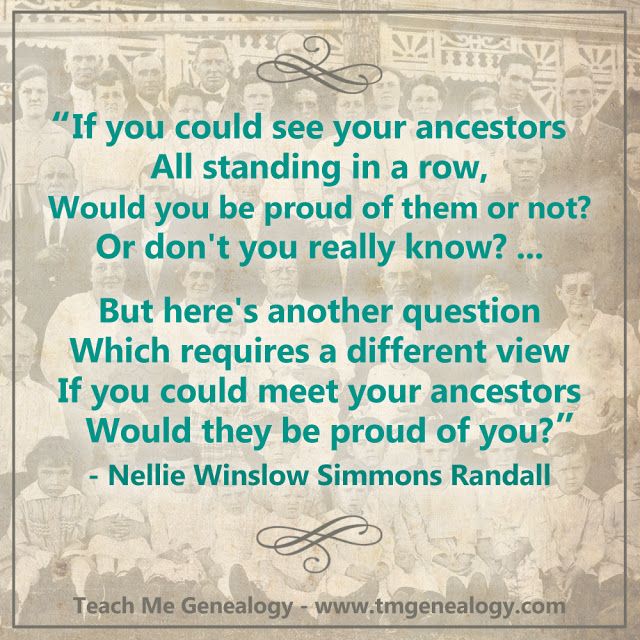
“What Would Our Ancestors Think Of Us?”

What Would Our Ancestors Think of Us!

Posted in Misc. | Leave a comment